
Yes, making art lowers stress, and you do not need any skill for it to work. In a study of 39 adults, about 75 percent had lower levels of the stress hormone cortisol after 45 minutes of free art-making, and the drop had no link to past art experience. For a busy adult, that is the appeal: a short, low-skill activity with a measurable calming effect. This page covers what the real benefits are and how strong the evidence is behind each, why making art settles a stressed mind, which creative activities work best, how to fit it into a packed week, and the honest point where art is not enough and a professional is the better call.
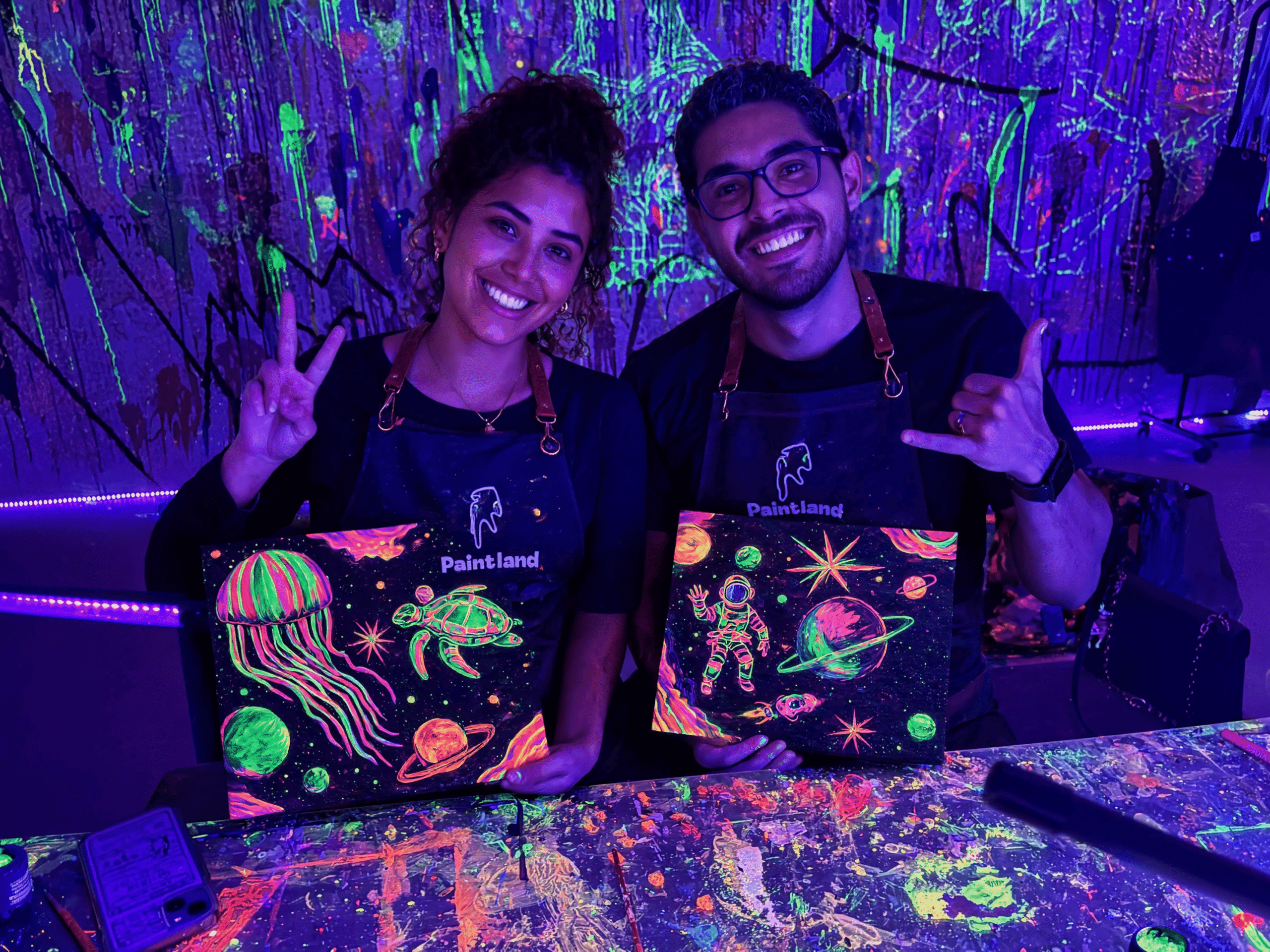
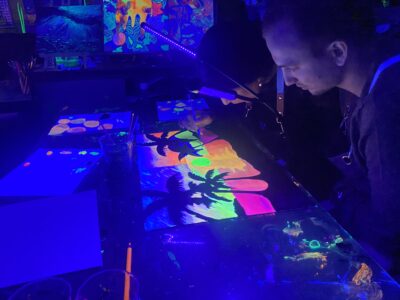 Participants creating glow-in-the-dark paintings at Cozy Art Land during a paint and sip event. |
There is a reason an hour with your hands in a project feels like a reset. Making art pulls your attention off the day and into the task, and the calming effect shows up in the body, not just the mood. Below is what the research actually supports, why it works, which activities help most, how to fit it into a packed week, and the honest line where a professional is the better call. |
Why Making Art Lowers Stress
|
The calming effect is not one thing. Several mechanisms stack on top of each other, which is part of why it works for so many people. The clearest is chemical. Cortisol is the hormone your body releases under stress, and in the research below it measurably dropped after a single art session. A lower cortisol level is your body stepping out of fight-or-flight. |
 |
The second is attention. Making something takes focus. Mixing a color, judging a line, deciding what comes next, all of it pulls your mind off the loop of worry and onto the task in front of you. People in the cortisol study described exactly this, a sense of losing themselves in the work and finding it freeing. That absorbed state is close to flow, and it is hard to ruminate and create at the same time.
The third is structure. A bounded activity with a clear thing to do, like filling in a shape or following a project, gives an anxious mind an easy place to rest. Research on adult coloring points to this, since the calming effect shows up with structured, repetitive making rather than from any single material or design.
The fourth is control. Stress often comes from things you cannot steer. A small art project is the opposite, a contained space where every choice is yours and the outcome is low-stakes. That restored sense of agency is calming in itself. On top of all this, art gives feelings a way out that does not depend on finding the right words, which is why people reach for it when a mood is hard to name.
The Real Benefits, and How Strong the Evidence Is
Plenty of pages promise a long list of benefits. The useful version separates what research actually supports from what is more experience than proof. Here is the honest breakdown.
It lowers your stress hormone. This is the best-supported benefit. In a 2016 study by Girija Kaimal and colleagues, about 75 percent of adults had lower cortisol after 45 minutes of open art-making, regardless of skill. The effect was short-term and measured after a single session, which is exactly what you want from a quick reset.
It calms an anxious mind. Several small studies have found that structured creative activity lowers anxiety. In a 2005 study, adults who had been made anxious and then colored a detailed design felt calmer afterward than those coloring a blank page, an effect later replicated. The honest catch is that a 2021 review of eight studies found coloring a set design was not clearly better than free drawing, which suggests the calming ingredient is the absorbing activity itself, not a special pattern.
It creates a mindfulness-like focus without meditation. The absorbed attention of making art is a present-moment state much like mindfulness, which research links to lower stress. For people who cannot sit still for formal meditation, a creative task is an easier path to the same quiet.
It builds confidence and a sense of accomplishment. A related study from the same Kaimal team found that a short art session raised self-efficacy, a measure of how capable people feel of handling tasks. Finishing something you made, even something small, carries a real lift.
It gives difficult emotions an outlet. Many people find that making art lets them externalize and sit with a feeling they cannot put into words. This is experiential rather than something a lab measures cleanly, but it is one of the most common reasons people keep coming back to it.
It can lift a low mood. Early research has linked a week of daily coloring to small drops in low mood and anxiety. This evidence is preliminary, so treat it as promising rather than proven, but the direction is encouraging.
It connects you to other people. Making art alongside others adds a social thread, and shared, low-pressure time with people is itself a buffer against stress. A class or a group session turns a solo habit into a standing reason to show up.
The thread through all of it: these are mostly small studies on everyday stress in healthy adults. They are enough to say making art reliably helps you unwind. They do not prove it treats anxiety disorders, depression, or trauma, and that line matters when you decide how to use it.
Art Therapy Versus Making Art on Your Own
 |
These two get blurred constantly, and the difference changes what you should expect. Clinical art therapy is treatment. A licensed art therapist uses art-making with you to work toward specific mental health goals, often alongside other care. It is a credentialed profession with training and oversight. Making art on your own, in a class or at home, is recreational creative stress relief. You get the calming, attention-shifting effect described above, but no one is treating a condition and it is not therapy. Both are worthwhile. They are simply different tools. |
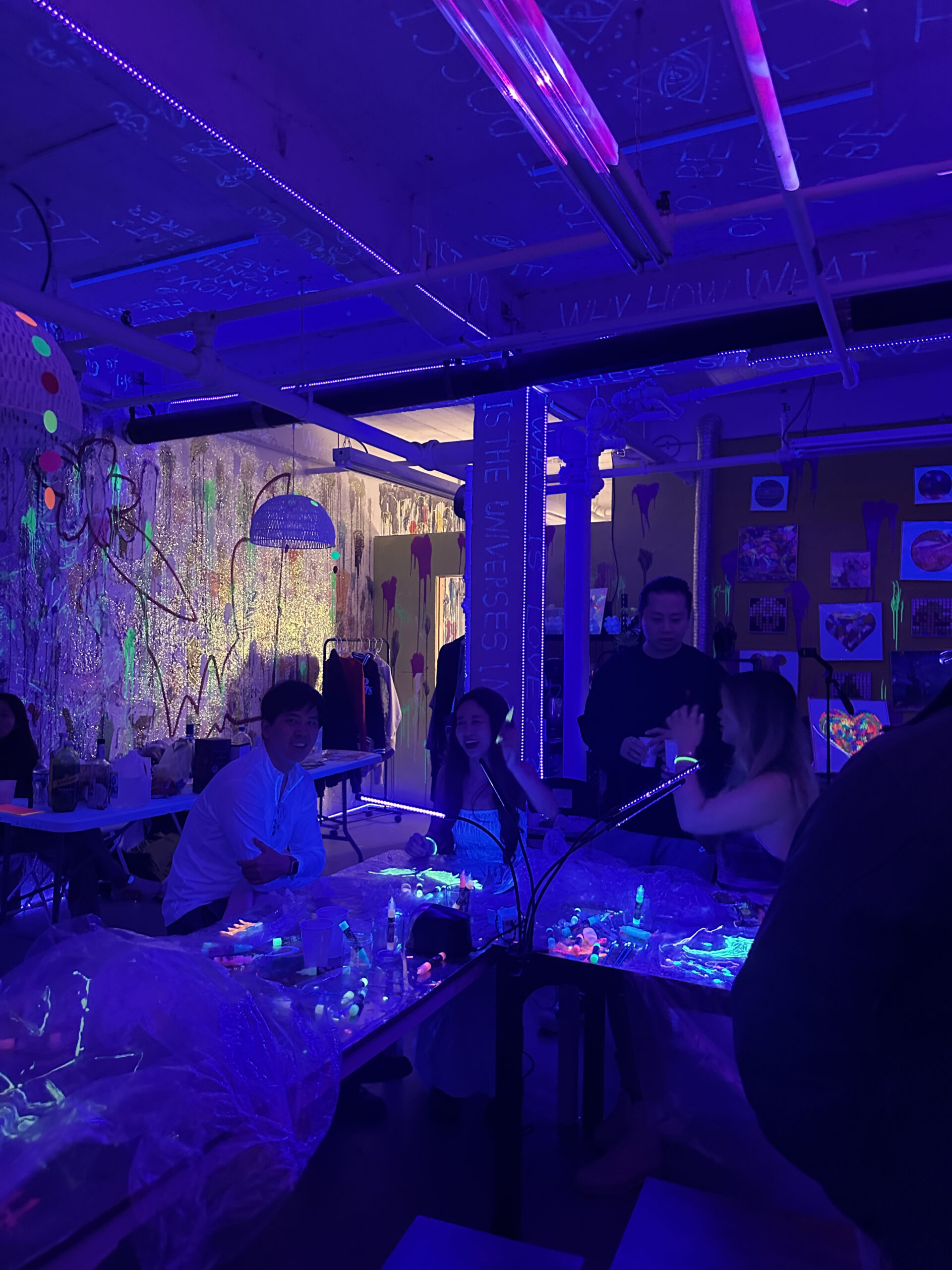
A paint and sip night, a pottery class, or an hour of drawing at the kitchen table is the second kind. If you want to unwind and reset, that is the right fit. If you are working through a diagnosed condition, a licensed professional should lead, and creative time can sit alongside that work as a healthy support.
Which Creative Activities Relieve Stress Best
The research found benefits across materials, so the best activity is mostly the one you will actually do. That said, different activities suit different people and moods.
Painting on canvas. Color and a clear finish line make this satisfying and forgiving. Loose, abstract painting removes the pressure to get it right and suits anyone who freezes at a blank page.
Drawing and sketching. The lowest-barrier option, since all you need is a pen and paper. Good for short sessions and easy to keep on a desk for a five-minute reset between tasks.
Adult coloring. The most studied for calm. The structure does the work, so there are no decisions to stall on, which makes it ideal for a racing, anxious mind at the end of the day.
Pottery and clay. The tactile, hands-in-it nature is the point. Working clay is grounding and physical, a strong choice for screen fatigue and pent-up tension.
Knitting and fiber crafts. The steady, repetitive motion is close to a moving meditation, and the portability means you can do it almost anywhere.
Art journaling and collage. Mixing words, images, and cut paper gives feelings a place to land without needing drawing skill. A good fit when you want an outlet, not just a distraction.
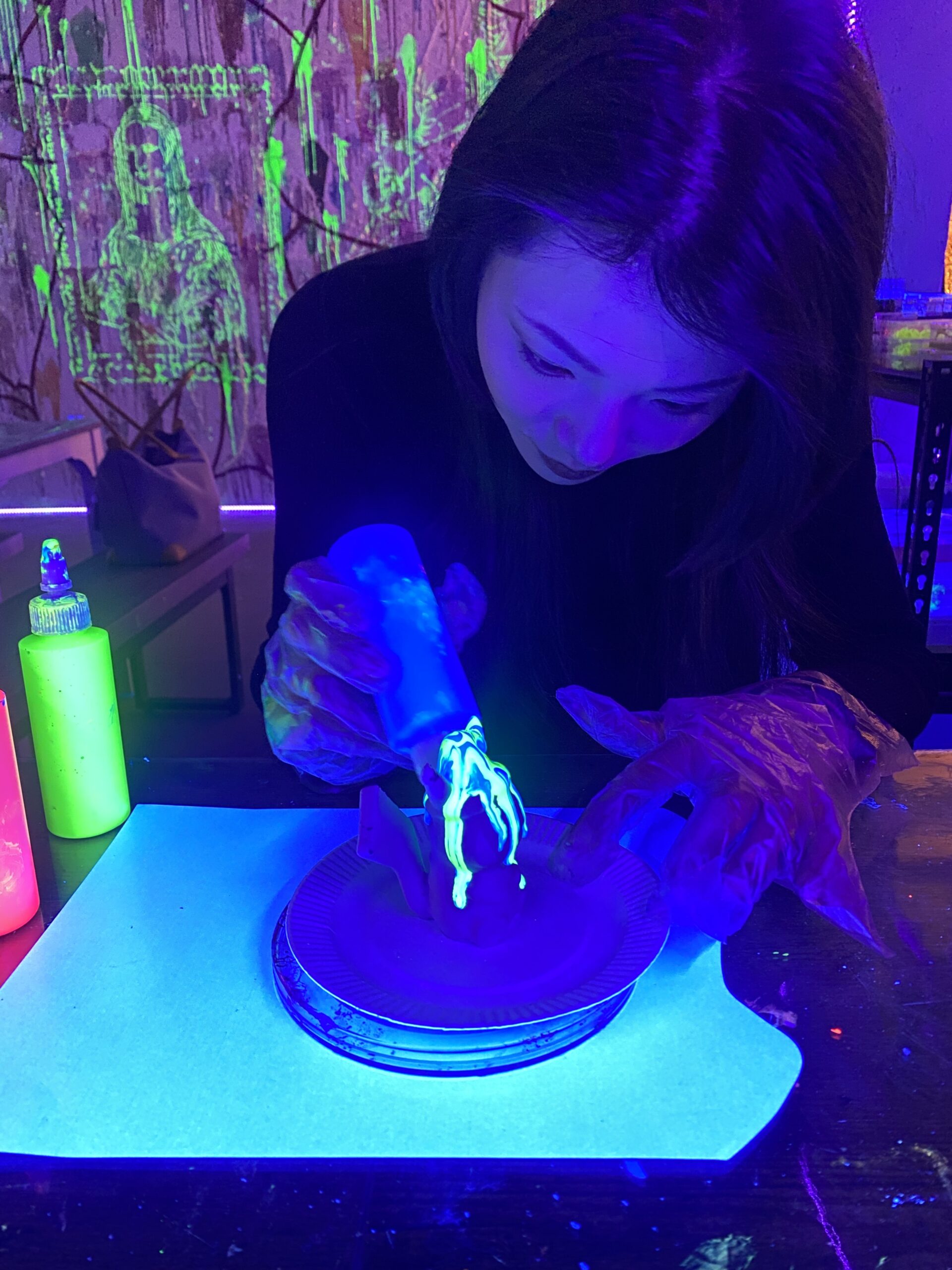
If choosing feels like one more decision, start with whatever is already in your home. The activity matters less than getting your hands moving and your attention off the day.
How Busy Adults Actually Fit It In
|
The real obstacle for most adults is not skill, it is time. The fix is to shrink the session until it is too small to skip. The 45-minute window in the research is the ideal, not the minimum. Ten or fifteen minutes still pulls your attention off stress and into the task. A short session most days beats a long one you keep postponing, so aim for small and regular rather than rare and ambitious. |
 |
A few things lower the barrier enough that it actually happens:
1. Keep supplies visible. A sketchbook and pens left on the desk or coffee table get used. Supplies in a closet do not.
2. Attach it to an existing habit. Ten minutes of drawing with your morning coffee, or coloring instead of scrolling before bed, slots a new habit onto one you already have.
3. Drop the goal. The calming effect comes from open, undirected making, not from a finished piece worth showing. Aim to play, not to perform, and never photograph it for approval.
4. Use a class for the hard part. If a blank page is its own pressure, a scheduled session with someone walking you through one piece removes the decision and puts it on the calendar so it happens.
Common Myths That Stop People
Four beliefs keep adults from trying this, and each one is worth clearing.
“I am not artistic.” This is the big one, and the research settles it. In the cortisol study, the calming effect had no link to past art experience. The relief comes from the act of making and the focus it demands, not from talent or a good result.
“I do not have time.” A useful session can be ten minutes. The barrier is starting, not scheduling, and a small habit attached to your day costs less time than the scroll it replaces.
“It is just a hobby, not real stress relief.” A measurable cortisol drop, lower anxiety, and a present-moment focus are real, studied effects. Calling it only a hobby undersells what is happening in your body.
“I need expensive supplies.” The study that lowered cortisol used basic markers, clay, and collage. A notebook and a pen is a complete starter kit. Money is not the entry fee.
When Making Art Stresses You Out Instead
For some people art-making backfires, and there is usually a fixable reason.
The most common is chasing a good result. The moment the goal becomes a piece worth showing, the pressure returns. Shift back to the process and the relief comes back with it.
The second is feeling watched. If a setting feels judgmental, the calming effect disappears. A supportive room, or your own kitchen table, solves it.
The third is the wrong medium. If detailed drawing frustrates you, switch to loose painting, clay, or collage. The research found relief across mediums, so there is no single right tool, only the one that suits you.
When Art Is Not Enough
Creative time is a healthy habit, not a treatment, and it has a clear ceiling. If your stress is constant, getting worse, or affecting your sleep, work, or relationships, that is past what an art session can carry. Ongoing anxiety, depression, and trauma need a licensed therapist or doctor, and an hour of painting is not a substitute for that care.
Making art can sit alongside professional support as a steadying habit, but it should not replace it. If you ever feel unable to cope, please reach out to a professional or someone you trust rather than handling it alone. This is a sensitive area, and there is no weakness in asking for real help.
Common Questions
A Low-Pressure Way to Try It
If you would rather not start at a blank kitchen table, a relaxed session does the setup for you and takes away the hardest part. You get the screen-free, hands-on creative time the research points to, in a room built for beginners at our Long Island City studio.
Book a relaxed paint and sip session
Stressed team at work? Ask about a group art session, or contact us with questions.