

A kids’ art studio birthday party is a booked session where an instructor runs a painting or craft project for your child and their guests, with materials, aprons, and cleanup handled for you. In Queens and across New York City, expect roughly $350 to $650 for a small neighborhood-studio party of up to eight to ten kids, rising past $1,000 for larger or premium packages, usually with a deposit to hold the date. It suits ages about five and up, runs 90 minutes to two hours, and sends every child home with finished art instead of a plastic goody bag. This page walks through the real cost, the project and theme choices, how the two hours actually run, the food and favor logistics, and how to plan one in Queens without the usual headaches.
How Much a Kids’ Art Studio Birthday Party Costs
Most studios price a party as a base rate for the first 8 to 10 children, then a per-child fee after that. What moves the number is format, group size, and how much the studio handles for you.
| Party type | Typical NYC-area price | Usual group size |
|---|---|---|
| Neighborhood art studio | $350 to $650 base, then $30 to $40 per extra child | Up to 8 to 10 |
| Mid-range or themed package | $700 to $1,000 | Up to about 15 |
| Premium studio or museum | $1,100 to $1,600 or more | 10 to 15, often ages 7+ |
That lands at about $35 to $70 per child once everything is counted. These are market ranges to plan against, not one studio’s fixed price, so confirm the exact package before you book.
Two costs catch parents off guard. The deposit, often around $100 and usually non-refundable, holds your date. The cancellation policy is the other one, since many studios charge the full base rate if you cancel inside a week of the party. Ask about both before you pay. And if a quote looks unusually low, check whether materials, aprons, table setup, and cleanup are inside the price or billed as extras, because that is where a cheap headline number quietly grows.
What the Studio Provides, and What You Bring
Knowing the split keeps the day calm and stops you from buying things twice.
The studio almost always provides the art project and every material it needs, aprons or smocks so clothes survive, an instructor to run the activity start to finish, the table setup, and the cleanup of all the paint and mess. In most cases each child also leaves with a finished piece, which is the part that makes an art party different from other venues. The take-home art is the favor, so you rarely need to assemble goody bags.
You bring the celebration side: the cake or cupcakes, any other food and drinks, candles and a lighter, plates, napkins, and forks, plus any themed decorations or balloons you want. Most studios hold the last 20 to 30 minutes for cake and food at a separate table while the artwork dries, and you are usually responsible for clearing that food area at the end. Confirm whether outside food is allowed and whether there is a fridge, since some smaller studios have neither.
Why Parents Pick an Art Party Over a Louder Venue
Bounce houses and trampoline parks burn energy, but they are loud, chaotic, and over the moment the music stops. An art party trades that for something steadier, and it tends to win for a specific kind of child and parent.
It is screen-free and calm enough that you can actually hear the kids and take photos that are not a blur. Shy or creative children who freeze in a high-energy crowd usually do well at a table with a project in front of them. It is inclusive across ability, since there is no winning or losing and no athletic skill to fall behind on. It runs indoors, so a rainy or freezing Queens weekend does not threaten the plan. And every guest leaves with a painting or craft they made, which keeps the day alive on a bedroom wall for months instead of ending at the door.
The honest counterpoint: if your child mainly wants to run and burn off energy with a big group, an active venue may fit them better. An art party rewards kids who like to make things and a parent who would rather have a calm room than a frenzy.
Project Ideas: The Studio Party Menu
The project is the heart of the party, and there are more choices than plain canvas painting. Picking the right one for your child’s age and interests matters more than any decoration.
- Canvas painting. The default for good reason. The instructor walks the group through one subject step by step and every child finishes a painting. Works from about age five up, and scales to any group size.
- Fluid bear pour. Paint is poured over a small bear figurine for a glossy, marbled finish. Very low skill, very high wow, and mess-contained. A fluid bear pour is a strong pick for ages five to ten who want a result that looks impressive without precise brushwork.
- Pour and spin art. Kids pour or spin paint for bright, unpredictable abstract pieces. The randomness removes the pressure to draw well, so it suits mixed-ability groups and younger kids.
- Clay and pottery hand-building. Shaping a small dish, figure, or pinch pot. The tactile, hands-in-it nature holds attention and suits kids around six and up who like building over painting.
- Tie-dye. A shirt or tote the child wears home, which makes the keepsake wearable. Best for ages six and up, and worth checking whether the studio handles the rinse and dry.
- Slime making. Sensory and wildly popular with the seven to ten crowd. Confirm the studio uses a skin-safe recipe and watch for glue allergies.
- Mosaic and suncatchers. Gluing tiles or colored pieces into a frame or window catcher. Calmer and detail-friendly, good for kids who like steady, careful work.
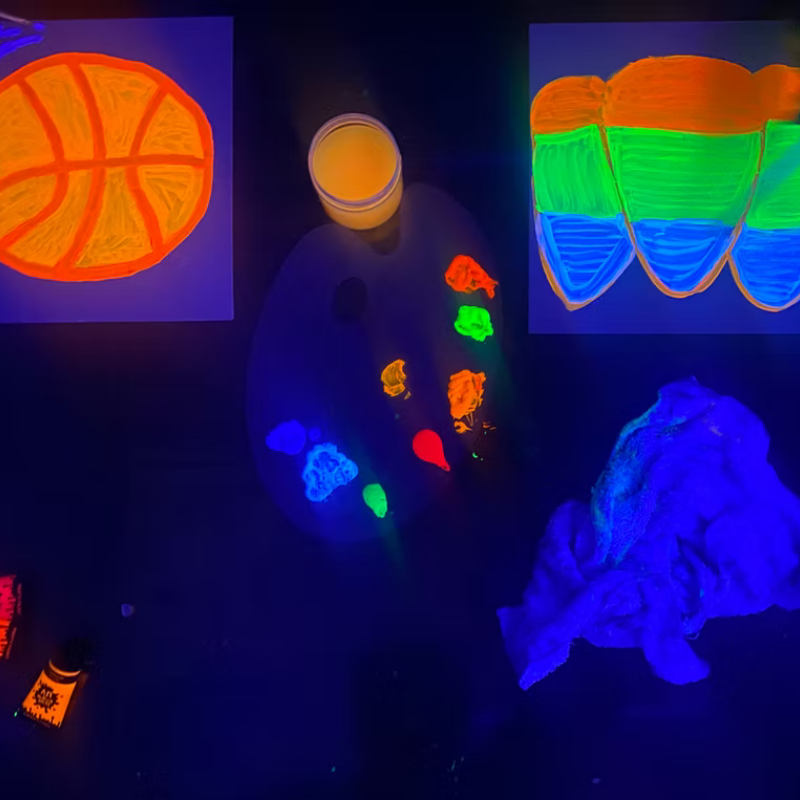
- Glow and neon painting. Painting under blacklight with fluorescent colors. It reads as cool rather than babyish, so it is a tween and older-kid favorite for ages eight and up.
Matching the Project to Your Child’s Age
The fastest way to a party that drags is a project that misses the age. Too fiddly and little ones melt down, too simple and older kids check out. A quick read by age:
Ages 3 to 4. Keep it short, sensory, and forgiving. Handprint canvases, simple stamping, or a pour project work because the result does not depend on control of a brush. Plan for a parent beside each child and keep the activity under an hour.
Ages 5 to 6. The sweet spot for a first studio party. Canvas painting with a simple subject, clay, or a fluid bear pour gives a clear, proud result without demanding precision, and the group can sit and focus for a full session.
Ages 7 to 9. Kids follow step-by-step instruction well here. Themed canvas painting, character art, slime, or a project that ends in something they chose ahead of time holds attention across the whole party.
Ages 10 to 12. Tweens want a real challenge and creative control. Pour painting, pottery, tie-dye, or a glow theme feels grown-up enough to land. Avoid anything that looks aimed at little kids.
Mixed ages. Choose a project with one simple base everyone can do, like a canvas or a pour, so a five-year-old and a ten-year-old both finish something they are happy with.
Themes That Pair Well With Art
You do not need a theme, but one ties the invitations, the project subject, and the cake together and makes the party feel planned. The trick is pairing the theme to a project that naturally fits it, so the art is the theme rather than a separate add-on.
Unicorns and mermaids pair with bright canvas painting or suncatchers. Dinosaurs and safari animals work as clay figures or a painted scene. Space and galaxy themes are a perfect match for pour and spin art, since the swirls already look like nebulae. Superheroes suit character canvas painting. A glow or neon theme runs the whole party under blacklight and is the easiest win for tweens. Ask the studio which themes they can build the project around, since most will tailor the subject to the birthday child’s favorite without charging more.
How the Two Hours Actually Run
Parents relax once they can picture the flow. A typical two-hour art party runs close to this:
- First 15 minutes. Guests arrive, get into smocks, and settle at the table. A short buffer here absorbs the families who run late.
- Next 45 minutes. The instructor introduces the project and the kids make their art. This is the calm, focused core of the party.
- About 20 minutes. Pieces are set aside to dry, hands get washed, and there is a little free time while the room resets for food.
- About 25 minutes. Cake, candles, and food at the separate table. This is your moment to run the birthday song and hand out drinks.
- Last 15 minutes. Favors and goodbyes. Kids collect their dried artwork to take home and parents arrive for pickup.
For a 90-minute party aimed at younger kids, the art and food windows shrink rather than the buffers, since arrival and pickup always take longer than you expect.
Food, Cake, and Allergies
Food is simpler at an art party than at most venues because the studio carves out a clear window for it. Cake or cupcakes are the easiest call, and cupcakes skip the cutting and plating. Pizza is the common hot option for a midday party, and it travels well if you order it to arrive near the food window rather than at the start.
Send a quick allergy question with your invitations and pass the list to the studio, especially for slime parties where glue can be an issue and for any nut concerns around food. Bring your own drinks and check whether the studio has a fridge or you need a cooler. Keep the food itself low-effort, since the art is the main event and a long meal only cuts into it.
Adults, Supervision, and Tipping
How many adults you need depends on age. For under-sixes, plan on parents staying and helping, and confirm the studio’s staff-to-child ratio, since one instructor cannot run a craft for fifteen small children alone. For older kids, some studios run drop-off parties, which means you supervise pickup and not much else. State the drop-off or stay policy clearly on the invitation so guest parents know whether to plan on staying.
Tipping is not required, but it is a kind gesture when an instructor goes out of their way, especially with a big or high-energy group. A tip of $20 to $50, or roughly 15 to 20 percent of the party cost, is a normal range. Some studios add gratuity to the package, so ask first rather than tipping twice.
Photos and Keepsakes
An art party photographs well because the room is calm and the lighting is steady. Pick one adult to be the camera person so the birthday parent is not stuck behind a phone the whole time. Some studios take and share photos themselves, so ask in advance. If other people’s children are in your shots, check with their parents before posting anything publicly, which matters more for school-class invite lists where you may not know every family.
Studio Party vs Home vs Other Venues
Most parents weigh three options. Here is the honest trade-off across the factors that actually decide it.
| Factor | Art studio | Art party at home | Active venue |
|---|---|---|---|
| Typical cost | $350 to $1,000+ | $100 to $300 in supplies | $300 to $800 |
| Your effort | Low, studio runs and cleans it | High, you run and clean | Low to medium |
| Mess at home | None | Paint everywhere | None |
| Take-home keepsake | Yes, finished art | Yes, finished art | Usually none |
| Noise and pace | Calm and focused | Calm, depends on you | Loud and high-energy |
| Best group size | 8 to 20 kids | Up to about 6 kids | 10 to 30 kids |
A home art party can be lovely for a handful of kids if you enjoy running the activity. An active venue fits a big group of kids who mainly want to move. A studio sits in the middle, low effort for you, calm for the kids, and a keepsake at the end, which is why it wins for art-leaning children and parents who would rather be present than managing chaos.
How to Plan It, Step by Step
A party that runs smoothly is mostly about timing and headcount.
- Book three to four weeks ahead. Weekend afternoon slots fill first, especially in spring and around school breaks. Popular studios book out further.
- Lock the headcount early. The base package covers a set number, so a firm guest list tells you the real price and keeps the room workable.
- Pick the project and theme. Match both to the birthday child’s age and interests, and tell the studio the exact ages so they pitch the project right.
- Set the length. Ninety minutes for ages four to six, two hours for seven and up. Longer than two hours and energy drops before cake.
- Plan the food window. Confirm the cake and food slot, usually the last half hour, and pack candles, a lighter, plates, and napkins the studio may not stock.
- Send invitations with the details that matter. Note the drop-off or stay policy and ask about allergies for the food portion.
- Confirm the day before. Recheck the start time, final headcount, and what you are bringing so the morning is calm.
Mistakes Parents Make, and How to Avoid Them
From running these parties, the same few slip-ups come up again and again.
Inviting too many kids for the helpers. One adult cannot run a craft for fifteen small children. Confirm the ratio, or keep the under-six group small.
Making the party too long. Two hours is plenty. A three-hour party means tired, cranky kids and a harder cleanup.
Choosing the wrong project for the age. A detailed canvas frustrates a four-year-old. Give the studio the exact ages so they set the right project.
No food kit. Showing up without candles, a lighter, or plates stalls the cake moment. Pack a small box with the basics.
Booking too late. Waiting until the week before usually means losing the slot you wanted. Lock the date once you have a rough guest count.
Notes for Queens and Long Island City Parents
If you are planning in Queens, a few local details save time. Studios in Long Island City sit close to the 7, E, M, and G trains at Court Square and the ferry at Hunters Point, which makes a studio party easy for guests coming from Astoria, Sunnyside, Woodside, and across the river in Manhattan. Street parking in Long Island City is tight on weekends, so tell out-of-neighborhood guests to plan for transit or a garage.
Weekend afternoon slots in the area book out fast in spring and early summer, so treat a popular date as something to reserve early rather than decide on later. Our own studio runs kids’ art birthday parties in Long Island City, and Saturday and Sunday afternoons are the first to go.
People Also Ask
What is the best age for an art studio birthday party?
Ages five to ten are the sweet spot, since kids can follow instruction and finish a piece they feel proud of. Three and four-year-olds can take part with simpler, shorter projects and a parent helping each child. For tweens, a more grown-up project like pour painting, pottery, or a glow theme keeps it from feeling babyish.
How many kids should I invite?
Most base packages cover eight to ten children, with a per-child fee after that. For younger kids, a smaller group of eight to twelve is easier to manage and keeps the room calm. Check the studio’s staff-to-child ratio before inviting a large group, since one instructor cannot run a craft for a big crowd of little ones.
Can we bring our own cake and food?
Most art studios let you bring a cake and food, and set aside the last 20 to 30 minutes for it at a separate table while the artwork dries. Confirm in advance whether outside food is allowed, whether there is a fridge, and whether you need to clear the food area at the end.
Should I tip the art instructor?
It is not required, but it is a kind gesture when the instructor goes out of their way, especially with a big or lively group. A tip of $20 to $50, or about 15 to 20 percent of the party cost, is normal. Some studios already add gratuity to the package, so ask before tipping so you do not pay it twice.
What if my child does not want to paint on the day?
A good instructor never forces a reluctant child and instead offers an easier way in, like helping with color mixing or starting with a simpler step. Most kids join once they see friends making something. Telling the studio in advance that your child is shy lets them plan a gentler start.
How far ahead should I book?
Three to four weeks is a safe minimum, and more for spring weekends and school breaks when popular studios fill early. Once you have a rough guest count and a preferred date, put the deposit down to hold it, since weekend afternoon slots go first.
Plan a Party at Cozy Art Land
We run kids’ art birthday parties at our Long Island City studio, with the project, materials, aprons, and cleanup handled so you can be present instead of managing paint. Tell us the birthday child’s age, rough guest count, and any theme, and we will match the project and time slot.
Want to see the space first? Look at our Long Island City studio.