

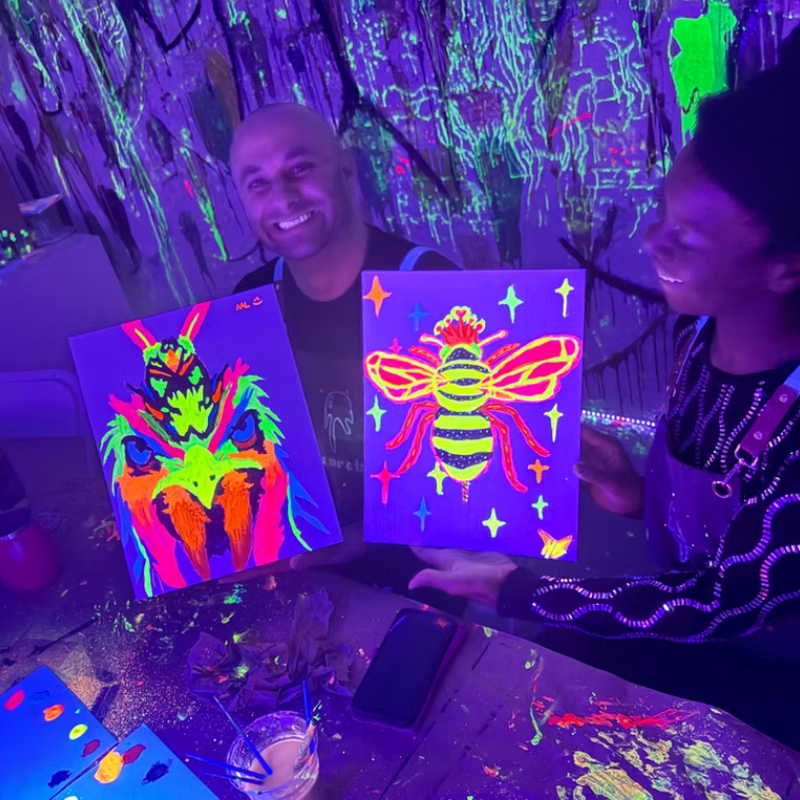
You do not need any art skill to enjoy your first sip and paint class. An instructor walks the whole room through one painting, step by step, and you follow along at your own pace with a drink in hand. Most first-timers arrive nervous and leave carrying a finished canvas they are proud of. A class runs about two to three hours, every supply is set up for you, and the point is a relaxed evening, not a perfect painting. This page covers what happens from the moment you walk in, the nerves and why they pass, what to wear, how the drinks and booking work, and how to pick a beginner-friendly session, based on what we see with new painters at our Long Island City studio.
|
The hardest part of a first sip and paint class is the part before you arrive, the nerves about not being artistic enough. The clip here is what it actually looks like in the room: relaxed, social, and a lot more doable than it feels from the outside. Here is what happens start to finish, why the nerves pass, what to wear, how the drinks and booking work, and which session to pick for a first time out. |
What a Sip and Paint Class Actually Is
|
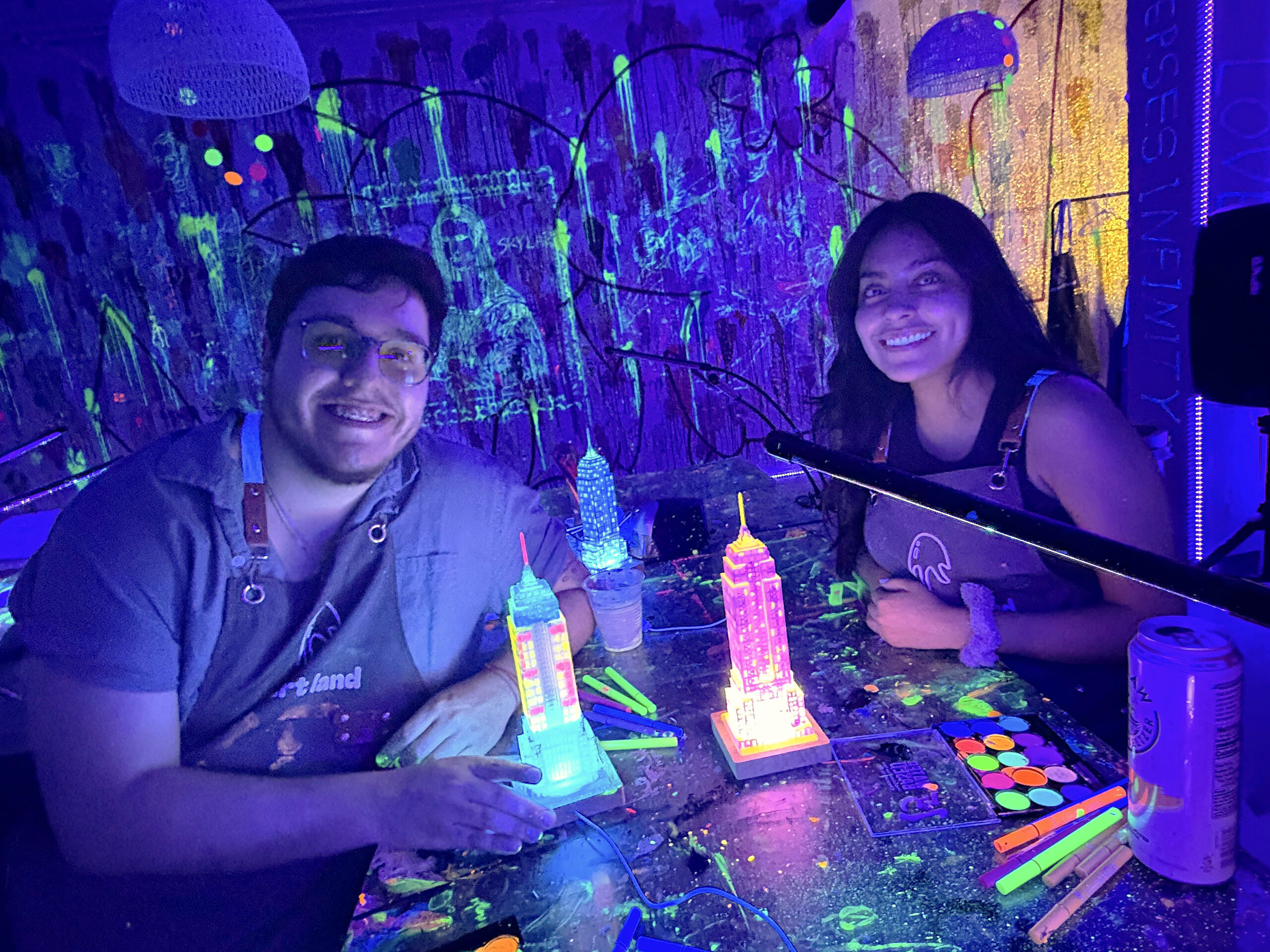
A sip and paint class is a group painting session where an instructor leads everyone through one featured artwork while you enjoy a drink. You copy the same painting the instructor demonstrates, so you are never staring at a blank canvas wondering what to do. The format is social, casual, and built for people with zero experience. Most sessions follow a classic canvas painting, with fun variations once you are ready, including glow in the dark sip and paint, seasonal themes, and private bookings for groups. For a first class, a standard beginner session is the easiest place to start. |
|
Why First-Timers Get Nervous, and Why It Passes
Almost everyone walks in with the same worries. Naming them takes most of their power away, because the reality of the room answers each one.
“I cannot draw, so I will be terrible.” You are not drawing from imagination. The instructor breaks the painting into a few shapes and colors and builds them in order, and you follow. Skill is not the entry fee, following along is.
“Everyone else will be better than me.” Most of the room is in the same boat, and a sip and paint crowd is overwhelmingly beginners. The people who look confident are usually just a class or two ahead of you, not trained painters.
“I will be the only one who came alone.” Solo painters are common, and the shared activity makes it easy to fall into conversation without forcing it. Within twenty minutes most people stop noticing who came with whom.
“I will fall behind and hold everyone up.” The class moves as a group and the instructor waits for the room. If you need a moment, you catch up on the next step, and nobody is timing you. The nerves usually fade once the first brushstroke is down and you see that the scary part was only the anticipation.
Do You Need to Be Good at Art?
No, and this is worth saying plainly because it is the single biggest hesitation. The instructor turns each painting into a sequence of simple steps, then leads the whole room through them in order. You are learning to follow, not to invent.
Every painting in the room ends up looking a little different, and that is the design, not a failure. The slightly uneven tree or the extra-bright sky is what makes yours yours. We see far more people surprised by how good their painting looks than disappointed by it.
What Happens, Start to Finish
Knowing the flow settles most of the nerves before you arrive. A typical class runs close to this:
|
1
|
You arrive about ten to fifteen minutes early. Your seat is already set with a canvas on an easel, paint laid out, brushes, water, and paper towels. There is nothing to set up. Music is on, people are settling in, and plenty of them look as unsure as you feel. |
|
2
|
You get your drink and settle in. This is the moment to relax, say hello to your neighbors, and get comfortable before the painting starts. |
|
3
|
The instructor sets the scene. You learn what you are painting that night and get the first reassurance that everyone’s version will look different. This is where the room loosens up. |
|
4
|
You build the painting in layers. Most paintings start with the background, then the main shapes, then the details. Each step builds on the last, so it stays manageable. The instructor circles the room, checks in, and fixes small problems in seconds when you ask. |
|
5
|
Final details and the reveal. The last stretch is highlights and small touches, which is when paintings come to life. Many studios set the finished pieces together for a quick group look before you head out with yours. |
The Drinks: BYOB, a Bar, or Neither
The “sip” part trips up a lot of first-timers, mostly because studios run it differently. There are three common setups, and it is worth checking which one your class uses before you go.
Bring your own bottle. Many studios are BYOB, which means you bring your own wine, beer, or other drinks, and the studio supplies cups and an opener. This keeps the price lower and lets you bring exactly what you like.
Drinks included or a bar on site. Some studios include a drink in the ticket or sell wine and beer at the venue, so you arrive empty-handed. The class costs a little more, but there is nothing to carry.
Alcohol-free sessions. Daytime, family, and some weekday classes skip alcohol entirely, with water, soda, or coffee instead. These are usually the all-ages options.
Two things to know. Classes that serve alcohol are typically 21 and over, while alcohol-free sessions often welcome all ages, so check the policy if a minor is coming. And you never have to drink to take part. The sip is about relaxing, not about how much is in your glass, so water is a perfectly normal choice. If you are drinking, eat something beforehand and pace yourself, since painting and an empty stomach do not mix well.
What to Wear

|
Acrylic paint washes off skin but not always off clothes, so dress to get a little messy. Wear something dark or old that you will not mourn if a drop lands on it, and leave the new white shirt at home. Aprons help and are almost always provided, but paint finds a way. Closed shoes beat sandals, since the floor near an easel collects stray drips. Tie long hair back so it stays out of wet paint, and if you wear glasses, bring them, because following the instructor’s canvas across the room matters more than you would think. Skip a fresh manicure if you are precious about it. |
What the Studio Provides, and What to Bring
Almost everything is set up for you. Your job is mostly to show up.
Booking, Group Size, and Timing
Sip and paint is mostly a reserve-ahead activity, not a walk-in one. Seats and supplies are set per person, so popular evening and weekend classes sell out, and showing up without a spot often means being turned away. Book a few days ahead for a weekend class, and earlier for a holiday or a specialty night.
Most studios take a payment or deposit at booking, and cancellation windows vary, so check whether you can reschedule if plans change. If you are coming as a group, many studios ask you to book together so your seats are side by side, and larger groups can often reserve the whole room as a private session. Classes usually run in the evening and on weekend afternoons, last two to three hours, and ask you to arrive ten to fifteen minutes early to get settled. If you are running late, message the studio, since the instructor starts the group on time.
Types of Sessions, and Which to Pick First
Once you know a first class is not scary, the only real choice is which kind. Here is how the common formats compare for a first time out.
Classic canvas session. The easiest first pick. One instructor-led painting at a relaxed pace, ideal for nervous beginners, date nights, and a low-key evening.
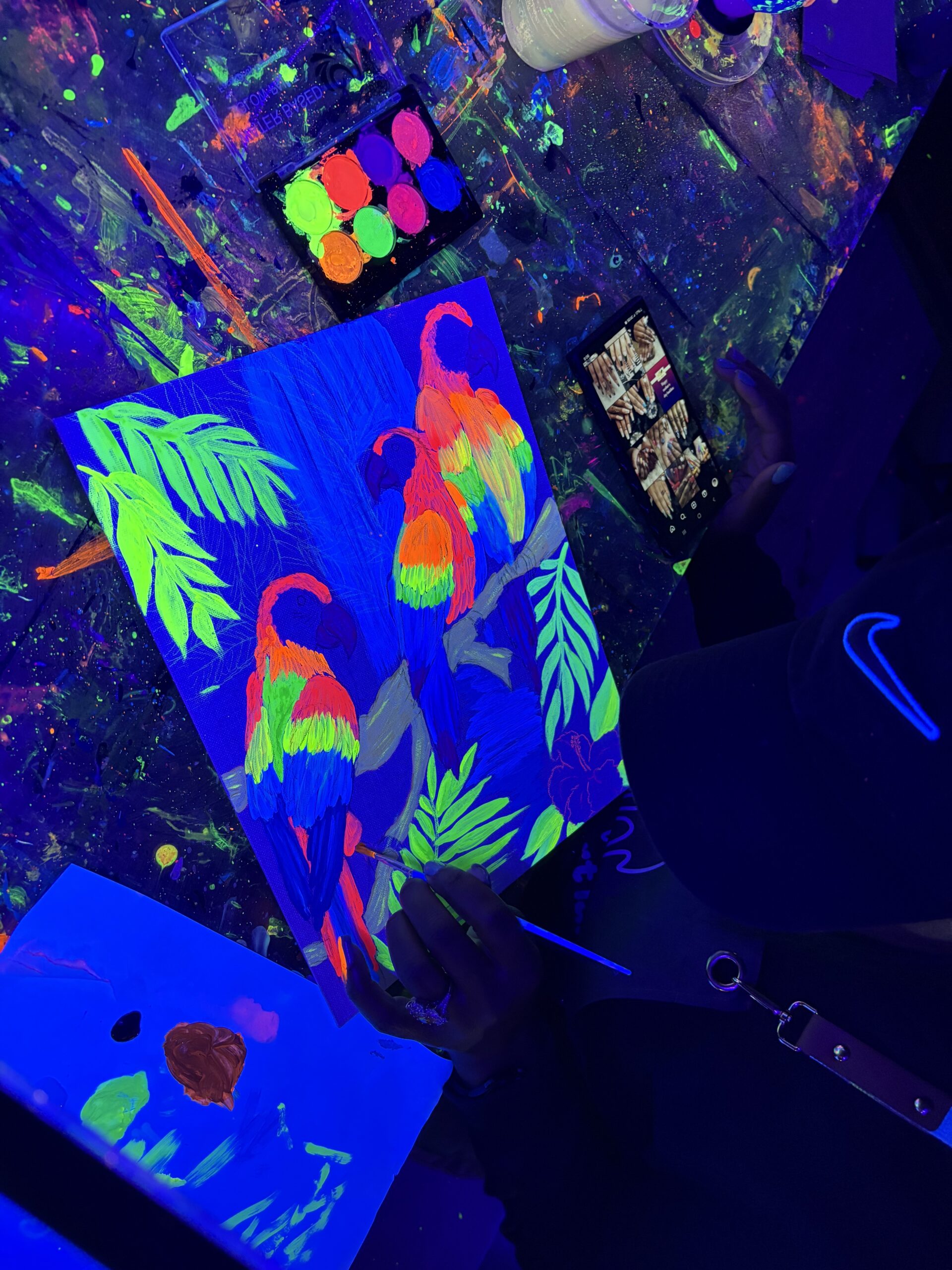
Glow in the dark session. Painting under blacklight with neon colors for a livelier, higher-energy night. A glow sip and paint is a fun first class if you want something that feels like an event rather than a quiet evening.
Seasonal or themed session. A painting tied to a holiday or a specific subject. Good if a particular design is what pulled you in.
Date night session. Often a paired or shared painting designed for two, a relaxed and slightly different way to spend an evening together.
Private group booking. The whole room for your party, which suits birthdays, friend groups, and team outings who want their own space and pace.
Who First Classes Suit, and When They Do Not
|
A first sip and paint class fits more people than you would guess: nervous beginners who think they cannot draw, date nights and friend groups wanting something more active than dinner, solo painters after a low-pressure way to meet people, birthdays and small celebrations, and anyone craving a screen-free evening that ends with something to take home. It is not for everyone, and that is fair to say. This is an instructor-led class, not an open studio, so if you want to paint your own subject freely with no structure, it may feel too directed. And if large, lively rooms drain you, a smaller weekday session or a private booking is the better call than a packed weekend night. |
|
Etiquette: Tipping, Photos, and Pace
The unwritten rules are light. Tipping the instructor is appreciated but not required, and a few dollars or around 15 to 20 percent of the class is a normal gesture if you had a good time, usually in cash. If there is a bar, tip there as you would anywhere.
Photos are welcome, and most people snap their finished canvas, so do not feel shy about it. Go at your own pace rather than racing the instructor, since there is no prize for finishing first. Phones are fine for a quick picture, though the evening is more fun screen-down. If you need to leave early, a quiet exit is no problem.
Tips to Make Your First Class Better
· Eat something beforehand so a drink does not hit on an empty stomach.
· Use plenty of paint. Thin, stingy strokes are harder to work with than generous ones.
· Do not try to match the instructor’s example exactly. Aim for your version.
· Step back every few minutes, since paintings look very different from two feet away.
· Ask for help the moment something feels stuck. That is what the instructor is there for.
Common first-timer mistakes. Most early frustration comes from a few habits that are easy to drop: painting too realistically instead of loosely interpreting the scene, using too little paint so blending gets harder, comparing your canvas to your neighbor’s instead of following your own, and getting stuck on tiny details before the whole painting is in place.
After Class: Drying and Keeping Your Painting
You leave with a wet canvas, so a little care keeps it intact. Handle it by the edges and lay it flat in your bag or car rather than stacking anything on top. Acrylic is usually dry to the touch within an hour or two, but give it a full day before you lean or hang it, and a few days to fully cure.
Once it is dry it is ready to hang as is. If you want it to last and stay vivid, a cheap brush-on acrylic varnish protects the surface, and a simple frame turns a first-class souvenir into something that looks deliberate on the wall. Plenty of first paintings end up exactly there.
Common Questions From First-Timers
Ready for Your First Class?
If you have been on the fence, a beginner session is the easiest way to find out you are more creative than you thought. We keep the room relaxed, set everything up for you, and walk you through every step at our Long Island City studio.
See dates and book paint and sip
Questions before you come in? Contact us.