


Cozy Art Land · Long Island City
More Than a Drawing for the Fridge
Most parents sign their kids up for art because their kid likes it. That’s a great reason. But if you’ve ever wondered whether a weekend art class is “just fun” or actually doing something for your child, you’re not alone. Here’s the short answer: it’s both. Below, we’ll cover what the research says kids actually gain from art classes, what separates a good class from a so-so one, and what you can do at home to make the benefits stick.
Key Takeaways
- Art classes build hand strength and control, which helps with writing and other everyday tasks.
- Kids practice planning, solving problems, and sticking with something hard.
- Classes where kids make real choices usually build more confidence than projects where everyone copies the same sample.
- A weekly class gives skills time to build on each other in a way a single workshop usually can’t.
- How you talk about your child’s art at home matters almost as much as the class itself.
Why Parents Ask About the Benefits of Art Classes
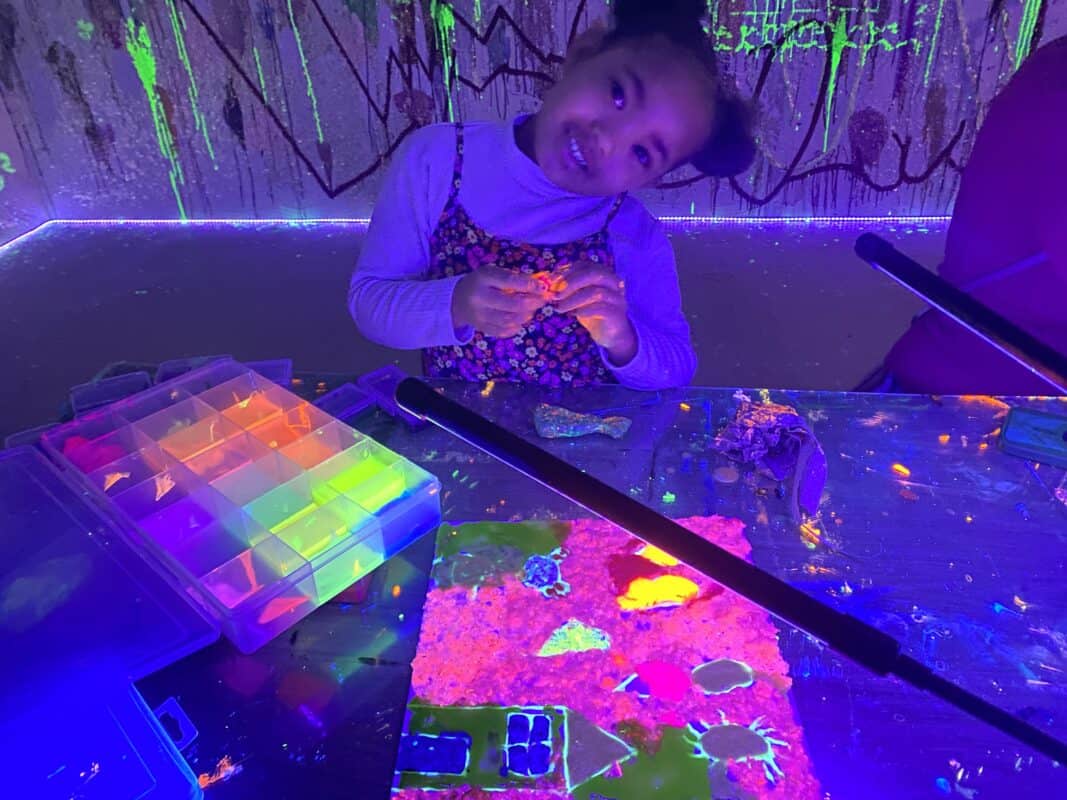
At Cozy Art Land, we run a weekly Saturday art class for kids at our studio in Long Island City, Queens, alongside slime, glow painting, and other hands-on workshops.
We see kids walk in unsure of themselves and walk out holding something they made with their own hands. Plenty of articles say “creativity” and stop there. That’s true, but it’s vague. So let’s get specific.
What Kids Actually Gain From Art Classes
01
Stronger hands and better control
Painting, cutting, gluing, and shaping clay all work the small muscles that handle pencils, buttons, zippers, and forks. The CDC’s milestone checklist for 4-year-olds includes holding a crayon with the fingers and thumb instead of a fist, and drawing a person with three or more body parts. Art class isn’t a substitute for your pediatrician, but it’s a fun, low-pressure place to practice.
02
Thinking like an artist
Harvard Project Zero’s Studio Thinking Project named eight “studio habits of mind,” including envisioning, observing, reflecting, and engaging and persisting. You see them when a child mixes too much blue into a green and has to fix it, or decides her cat painting needs a hat.
03
Confidence from finishing something
There’s a specific kind of pride in holding up a finished piece and saying, “I made that.” Kids don’t always get that at school, where a lot of work gets graded and filed away. At our studio, kids take their finished work home the same day.
04
Language, patience, and social skills
Kids explain what they’re painting, ask the person next to them for the glue, and wait their turn for a color. Generally speaking, those small social moments are easier for shy kids when their hands are busy and nobody’s focused on them.
05
Empathy and engagement at school
A randomized study of more than 10,000 students in 42 Houston schools, reported in Education Next, found more arts education led to a 3.6 percentage point drop in disciplinary infractions, higher writing scores, and more compassion for others. It was a school program, not a weekend class, but it points in a clear direction.
Process Art vs. Product Art: Why It Matters
Art classes don’t all deliver the same benefits. One of the biggest differences is whether the class is built around the process or the product.
Product-focused class
Every child copies the same sample, and the goal is for all the results to look alike. Have you ever heard a child ask “Is this right?” while making art? That usually means they’re worried about matching someone else’s idea.
Process-focused class
Kids explore materials and make their own choices. NAEYC explains that process-focused art experiences help children relax, focus, and feel successful while building planning, problem-solving, and fine motor skills.
Our approach sits in a friendly middle ground. An instructor guides each project, so kids aren’t staring at a blank page. But there’s no pressure to be perfect, and every child works at their own pace and puts their own spin on it.
Why a Weekly Class Beats a One-Time Workshop
Both are worth doing. But skills like persistence and observation grow with repetition.
One-time workshops
A blast, and a great way to see if your child enjoys hands-on art. We host plenty, from our slime art workshop to Fluid Bear art.
A weekly class
In our Saturday class, the instructor designs a new project each week based on learning goals, the kids’ interests, and the materials on hand. One week might be painting, the next drawing, mixed media, or crafts. If your child tends to lose interest when activities repeat, that variety helps a lot.

What to Look For in a Kids’ Art Class
Not sure how to compare your options? Here’s what we’d look for as parents:
- Guided, not scripted. Kids should get clear help without being told exactly what their art should look like.
- Materials included. Supply lists add cost and hassle, so it’s worth knowing upfront.
- Mess handled. Aprons and a studio set up for paint save your clothes and your kitchen table.
- A realistic time block. For most kids, about two hours is enough time to finish a project without rushing.
- Something to take home. Kids get something to show off, and it starts a conversation with you.
- Easy logistics. Location, transit, and stairs or elevators all matter, especially with little ones.
How to Talk to Your Child About Their Art
Here’s the part most guides skip. What you say when your child shows you their work can shape how they feel about making art.
- Describe what you see. “That’s beautiful!” is kind, but it doesn’t give kids much to work with. NAEYC suggests something like “Look at all the yellow dots you painted.”
- Ask open questions. Try “How did you make that color?” or “What was the hardest part?”
- Try not to fix it. It’s their art, not ours.
What Our Saturday Art Class for Kids Looks Like
Our kids’ art class in Long Island City runs every Saturday and lasts about two hours. A single class is $50, and a 10-class pass is $450, which saves you $50 if your child plans to come regularly. Kids work on hands-on projects in painting, drawing, mixed media, and crafts with a variety of materials. A few practical details from our studio FAQs:
- Book ahead. Booking is required because space is limited.
- Dress for paint. We provide aprons, but dress your child in clothes that can get a little paint on them.
- Location. 10-40 45th Ave #3F, on the third floor. There are stairs only, no elevator.
- Getting here. The closest subway stops are Court Square (E, M, G, 7) and Vernon Blvd-Jackson Ave (7).
Related Considerations
Making a day of it?
Our guide to things to do with kids in Long Island City has ideas for before or after class.
Want to know more about the studio?
Get directions, hours, and parking tips on our art studio in Long Island City page.
Planning a party?
We also host kids’ birthday parties with the activity, materials, and cleanup handled.
Bringing a school or camp group?
Check out our art field trips for classes, camps, and youth groups.
Kids’ Art Class FAQs
What age should kids start art classes?
Many kids are ready for a structured art class around age 4 or 5, when they can follow simple directions and hold a crayon or brush with their fingers. At our studio, many classes welcome kids from about that age, depending on the session.
How long should an art class for kids be?
In most cases, kids’ art classes run between one and two hours. Our Saturday art class for kids lasts about two hours. That’s generally enough time to finish a project without rushing.
Do kids need any art experience?
No, our classes are built for beginners, and an instructor guides each project step by step.
What should my child wear to art class?
Casual clothes that can get a little messy. We provide aprons, but paint can still end up on sleeves.
Are art classes good for shy kids?
They often are. Art gives kids something to focus on with their hands. That can take some pressure off talking to others while they get comfortable with the group.
How much do kids’ art classes cost in NYC?
Prices vary by studio and program length, but at our Long Island City studio, a single Saturday class is $50 and a 10-class pass is $450.
What’s the difference between process art and product art?
Process art lets kids explore materials and make their own choices, while product art asks kids to copy a set example. Process-focused activities tend to give children more room to experiment and build confidence.